
Lockup Restoration Complete – March 2026

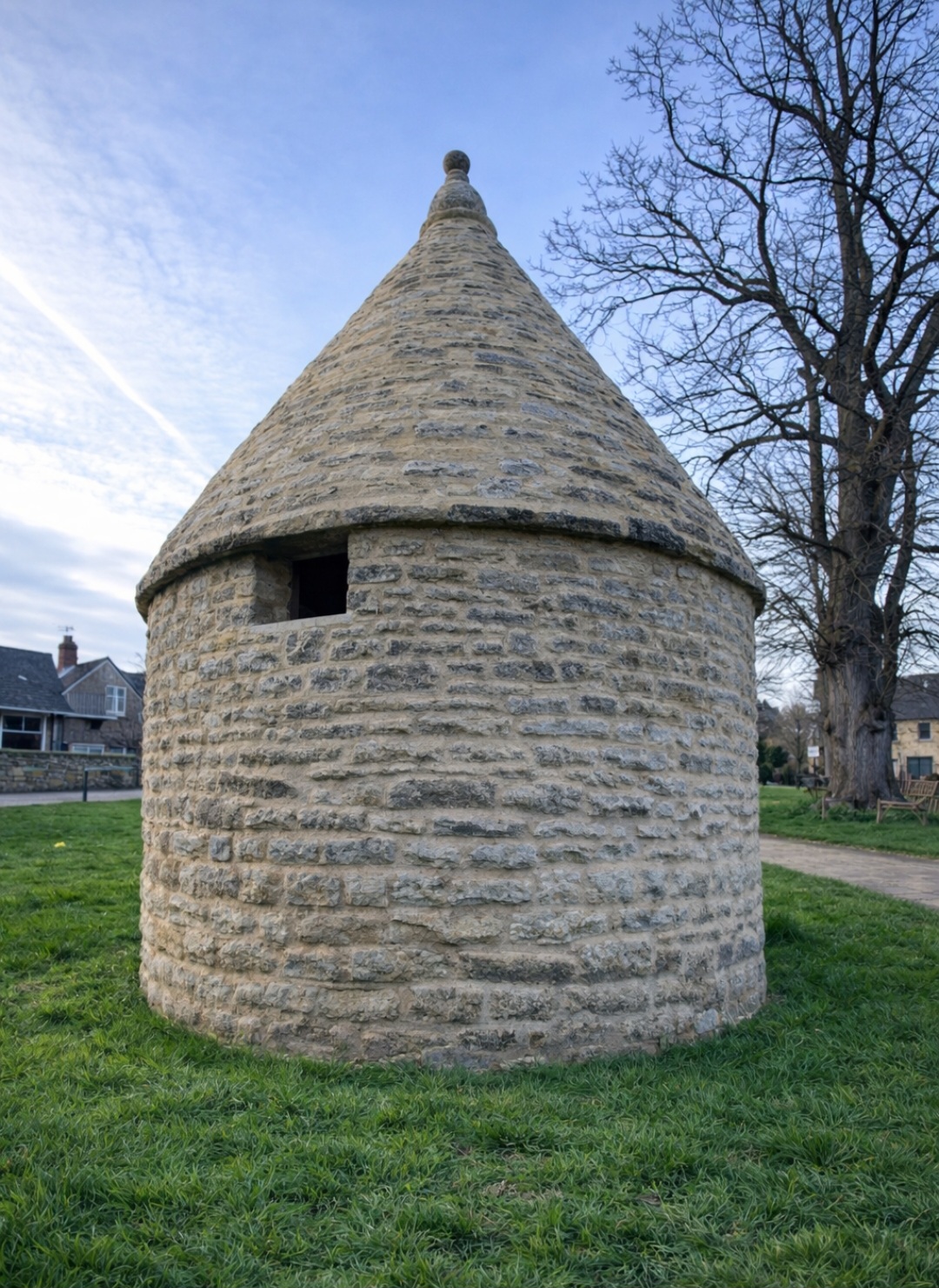

The restoration of the historic Lockup on The Green has now been completed and the scaffold has been removed. The Lockup is an early 19th-century circular stone structure of national heritage importance in the centre of Harrold village. The work was required to address structural deterioration caused by weathering and timber decay, which threatened the long-term survival of the building. Residents may have wondered why the structure remained fully covered for such a long period. The reason is because the works involved traditional lime mortar, which needs time and stable conditions to cure properly. The protective covering allowed the repairs to set correctly over the winter, avoiding damage from heavy rain or frost and ensuring a durable finish.
The works were carried out by Herringbone Restoration, with specialist oversight from Priory Heritage Ltd to ensure compliance with Historic England requirements. The project was supported by external funding, with a large proportion of the costs met through a government UK Shared Prosperity Fund grant administered by Bedford Borough Council, and from Borough Councillor Alison Foster’s ward fund.
The parish council is pleased to see this very important local heritage asset properly conserved for the future and is grateful to the government UKSPF fund and Borough Councillor Alison Foster for their generous funding, and to Historic England for their support on the project.
More detail on the works
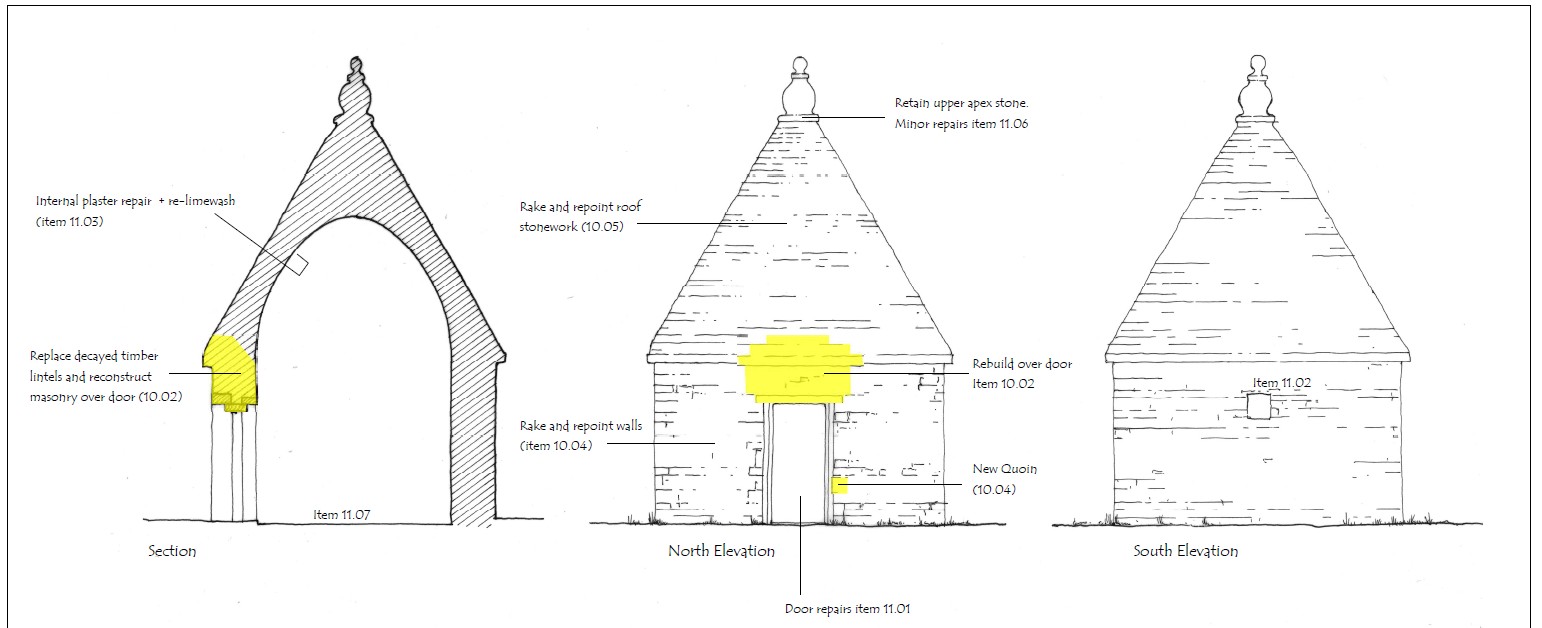
In late 2025 and into early 2026, Harrold Parish Council undertook careful repairs to ensure this unique building remained standing for generations. With guidance from Priory Heritage Ltd, a historic buildings consultants, and support and approval from Historic England, the works included:
- Rebuilding the stonework above the doorway and replacing the decayed oak lintel.
- Raking out and repointing the limestone walls and roof using traditional lime mortar.
- Repairing the timber door and internal lime plaster, finished with limewash.
- Stone and quoin replacements using matching local stone.
Specialist contractor Herringbone Restoration, whose portfolio includes Grade I listed churches, carried out the works.
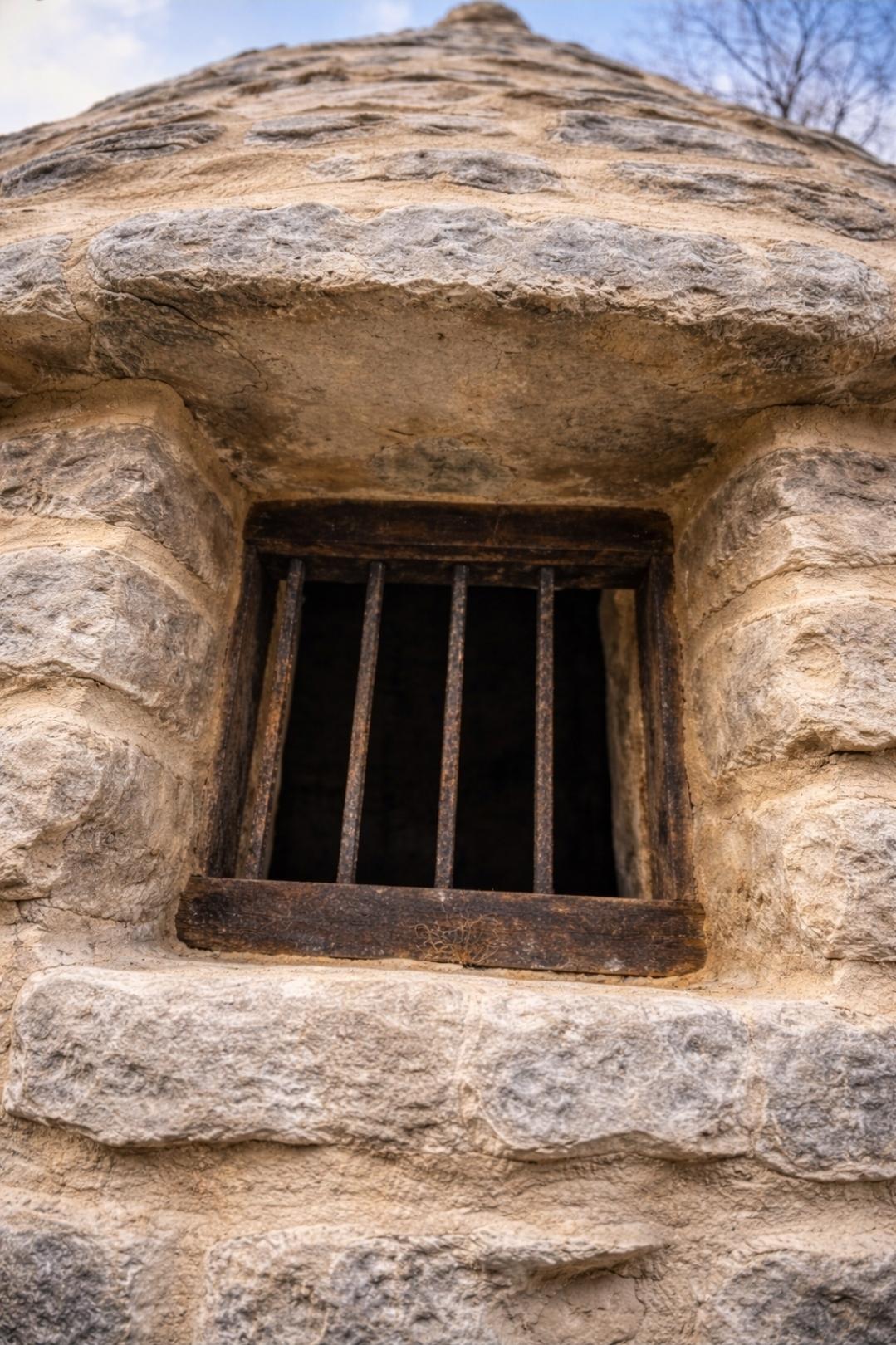
Photos before the restoration and a diagram of the works (Courtesy of Priory Heritage Ltd):

Click To Enlarge
History of the Lockup
In 1824, Harrold’s Manor Court granted four square yards of land on The Green “for the purpose of building a cage.” Within a year, the Lockup was standing — a circular limestone cell with a steep conical roof and a heavy timber door. Built from local limestone rubble and capped with a conical stone roof topped by a ball finial, the Lockup is one of only a handful of its kind in Bedfordshire. It was listed Grade II in 1952, recognising its architectural and historical importance.
Inside, it contained a single bare chamber used to hold the intoxicated, disorderly, or suspected wrongdoers overnight before facing the magistrates. Justice was summary and local: by morning, prisoners were escorted across The Green to the thatched cottage at No. 13, the Old Court House, where local magistrates sat. Number 13 The Green, now a private thatched cottage, dates from the 17th or 18th century and was later used as Harrold’s Court House. From its front room, magistrates dealt with minor offences, settling disputes and administering village order. From the door of the Lockup to the threshold of the Court House was only a few steps – a short, sobering walk.
Conditions were crude: no heat, no light, a flagstone floor and a small window for air. Local constables used it mainly for drunk and disorderly behaviour or for holding suspects overnight. By the late 1800s it had outlived its use and was instead used to store lamps and oil. Its last famous “occupant” came in 1967 – a villager, the late George Knight (known as Georgie) who spent 48 hours inside on a wager, proving the little prison was still secure over a century later.